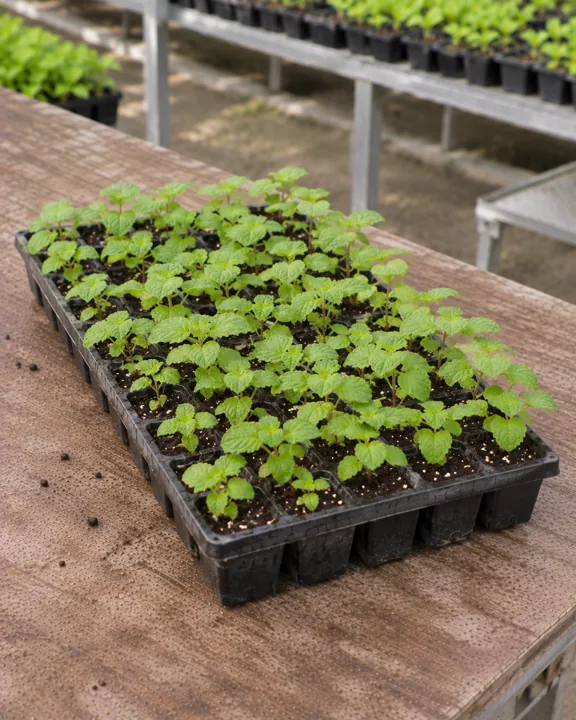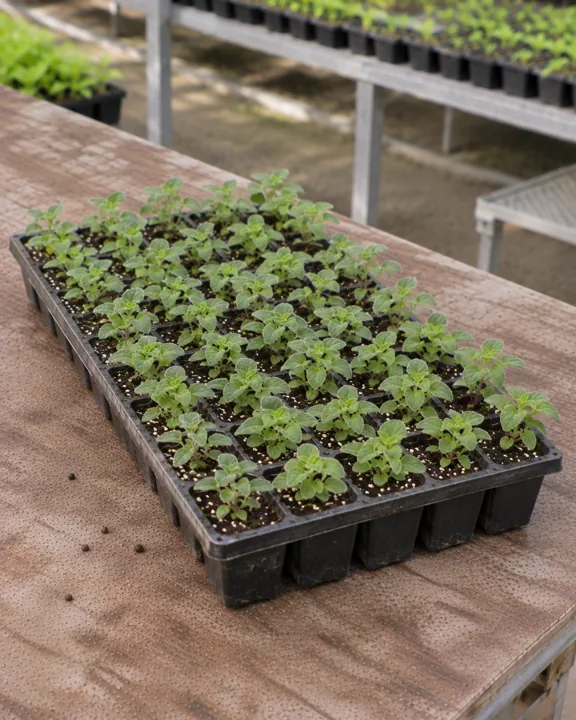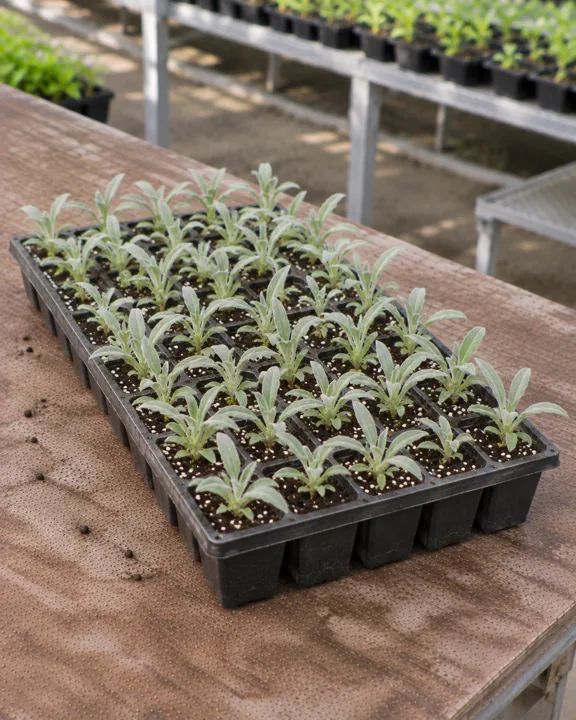
Thyme
Thymus vulgaris
- Name
- Thymus vulgaris
- Family
- Lamiaceae
Every seedling is supplied with a Plant Passport.
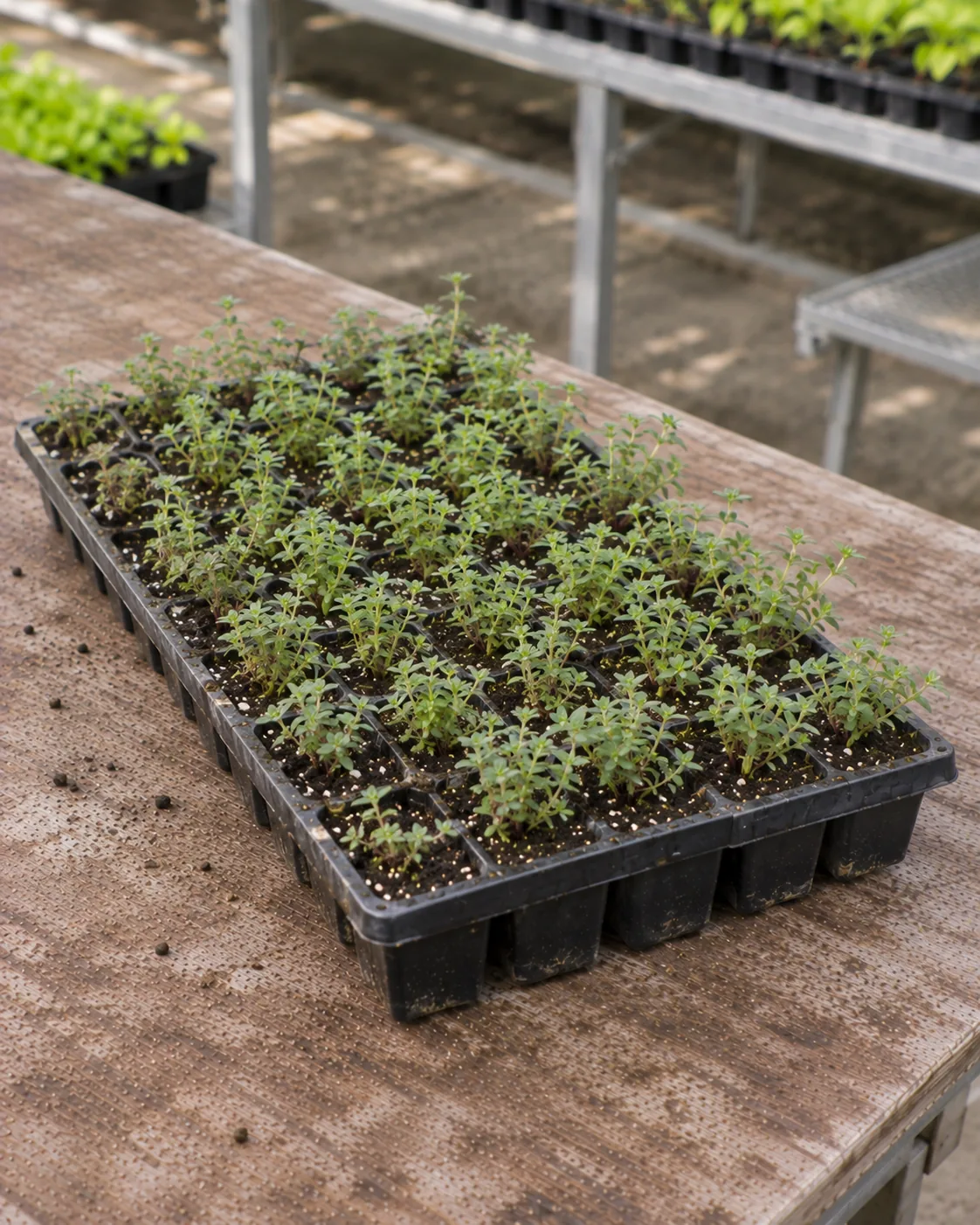
Description / Climate / Soil
An extremely hardy perennial shrub (6–7 years), low-growing (30 cm), with upright stems and a pleasant aroma. It thrives in both warm and cold areas. It grows on dry land, while on irrigated land higher production comes at the expense of quality. It has no special soil requirements, but prefers medium-textured, calcareous, gravelly soils.
Propagation
By seed in a seedbed (August is the best time); by suckers; by cuttings (the most expensive method).
Planting / sowing season
Seedlings from August seedbeds are transplanted in October–November; from autumn seedbeds, in spring. Suckers taken in autumn or spring are planted straight into the field. The best transplanting season is autumn. Planting is done by hand or with tobacco-planting machines in rows 50–60 cm apart with 30–40 cm within the row. Fertilisation (November) with 30 kg of ammonium phosphate and weed control are essential.
Harvest
The best harvest stage is full bloom (June). If destined for essential oil, it goes for distillation after cutting; as dry herb, it is stored after drying.
Yields
Average yield is 700–800 kg of fresh herb or about 200 kg of dry herb per stremma. A second cut (August) adds a further 30%.
Uses
The dry herb and essential oil are used in the food industry. It contains thymol, which has strong antiseptic properties. Also used in perfumery and the drinks industry. It is described as antiseptic, deodorant, tonic, digestive and antispasmodic.
Translated from the original Greek product information.
Interested in thyme?