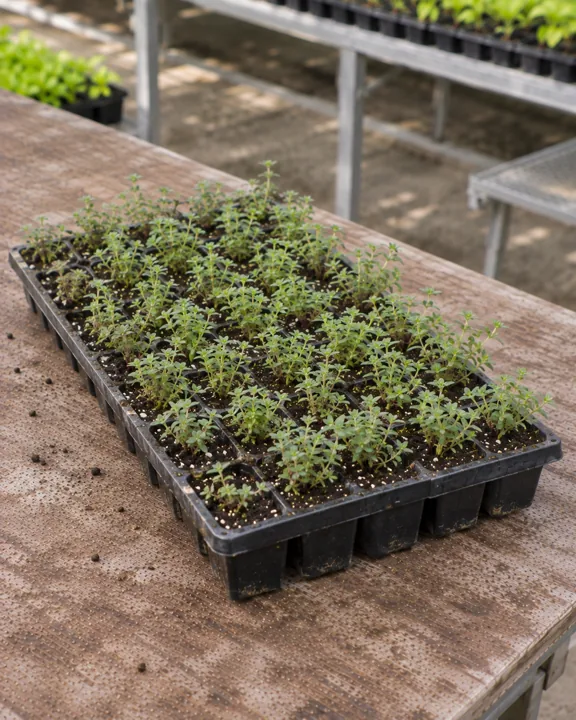
Greek oregano
Origanum vulgare
- Name
- Greek oregano
- Family
- Lamiaceae
Every seedling is supplied with a Plant Passport.
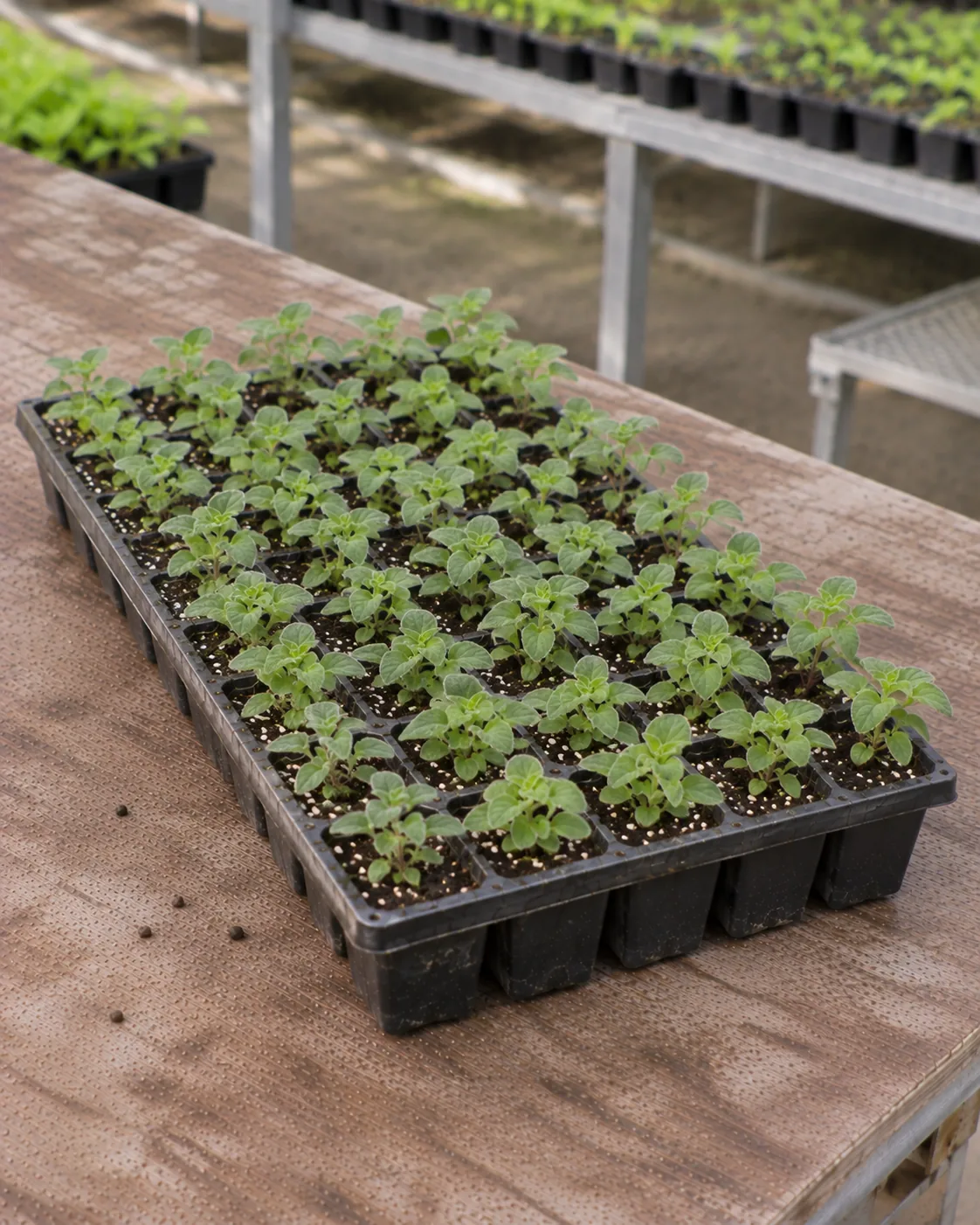
Description / Climate / Soil
A perennial plant, with 7 well-known species in the Greek flora, all of which grow in a variety of climatic conditions. The most suitable areas are calcareous, semi-mountainous areas with cool summers. In oregano crops, perennial weeds must be eradicated.
Propagation
By seed in seedbeds; by cuttings; by suckers.
Planting / sowing season
Seedbeds established in early August, transplanted in October–November. Seedbeds established in October–November, transplanted in spring. Seedbeds established in February–March, transplanted in May or autumn. Planting is done in rows 50–60 cm apart with 30–40 cm within the row. Crop care: deep summer ploughing, then lighter ploughing and disc harrowing before transplanting; fertilisation with 30–40 kg of ammonium phosphate per stremma; weed control is essential; where water is available, 1–2 waterings in summer.
Harvest
Harvest takes place at flowering, which varies with climate and altitude.
Yields
Coarsely rubbed product (dry herb): 80–100 kg per stremma in the 2nd year and 140–170 kg per stremma in the 3rd year. Drying in the shade ensures a higher-quality product. For oregano oil extraction, yields in dry herb are 350–380 kg per stremma.
Uses
As a seasoning, the dry herb is considered tonic, stomachic, diuretic and expectorant. The essential oil is used in perfumery, pharmaceuticals and to combat plant and animal diseases.
Translated from the original Greek product information.
Interested in greek oregano?