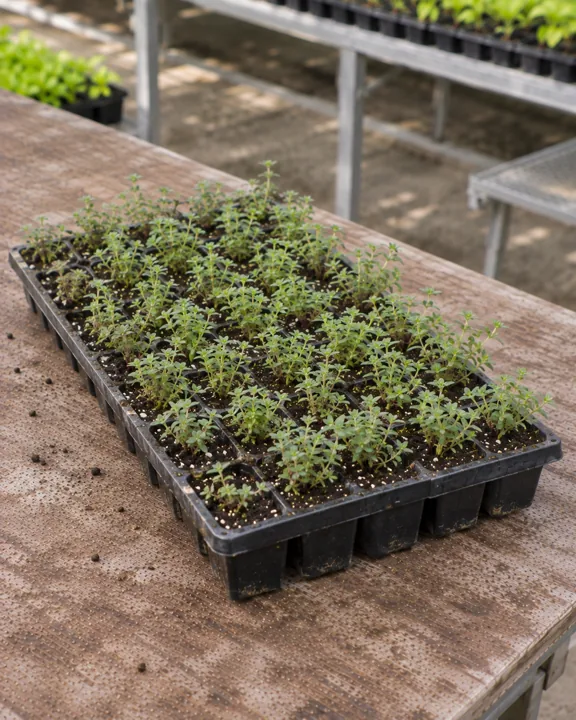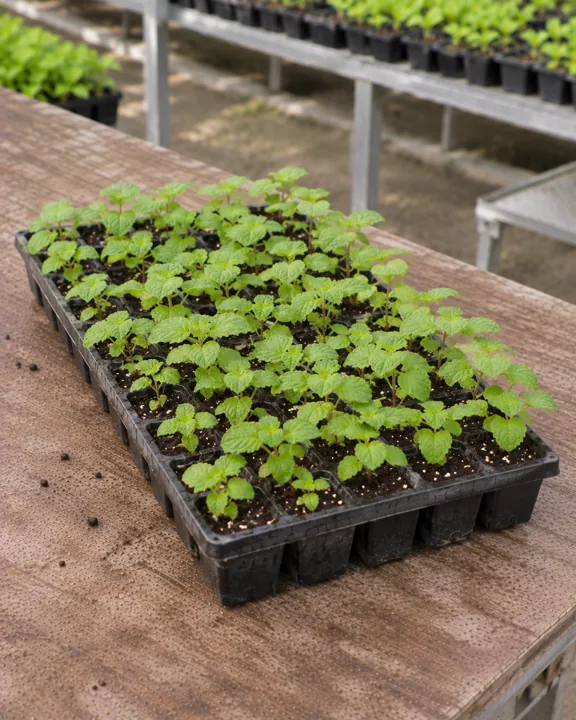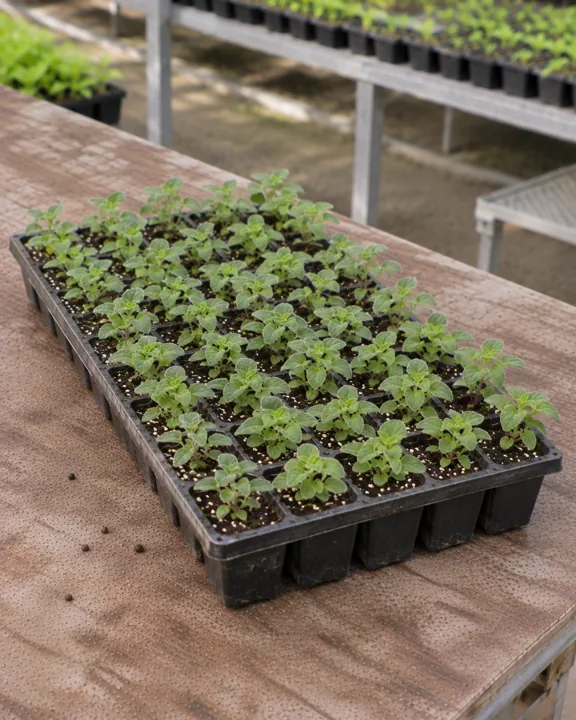
Mountain tea
Sideritis spp.
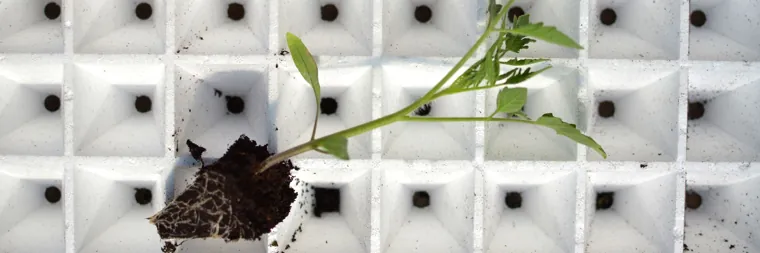
Every seedling is supplied with a Plant Passport.
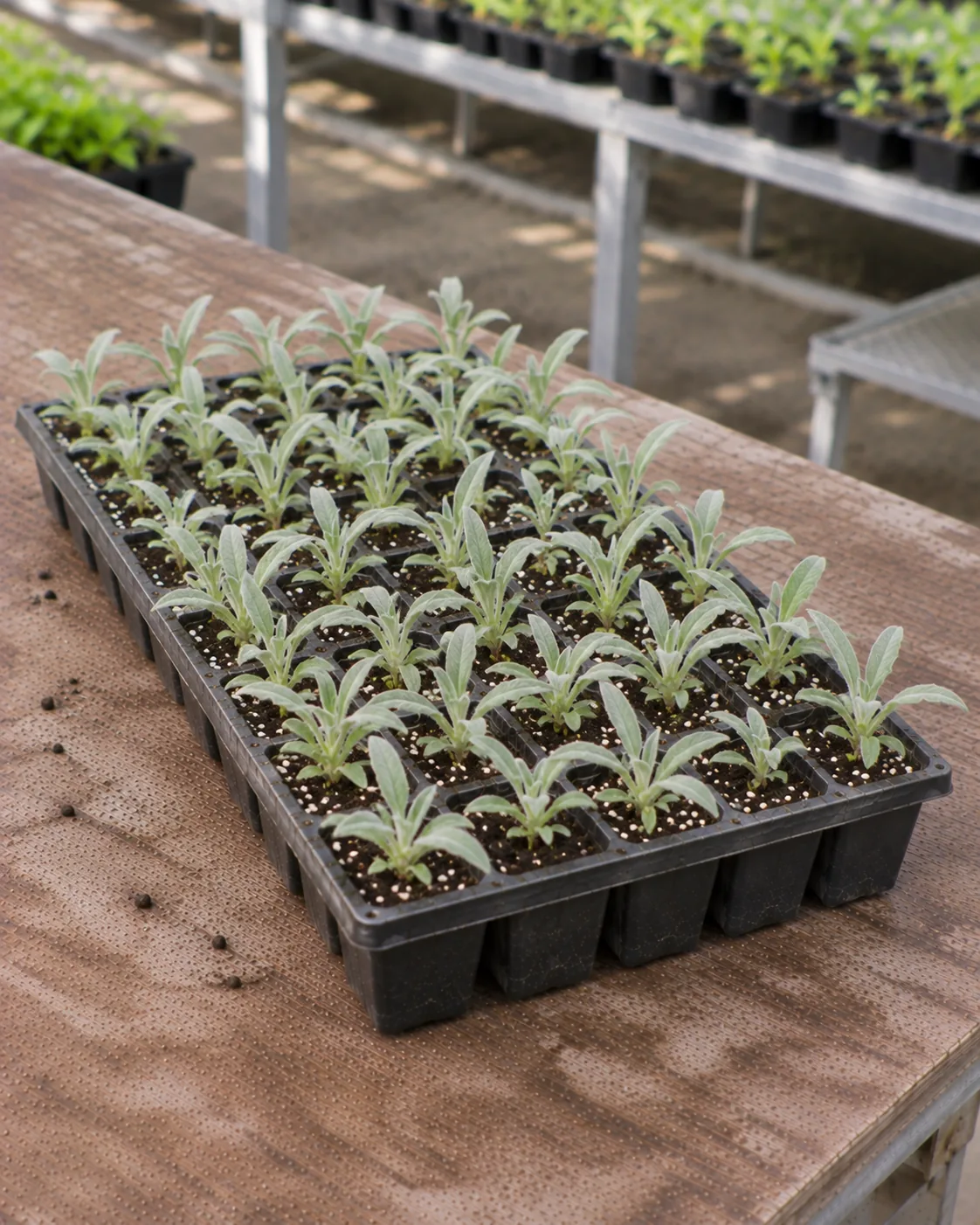
Description / Climate / Soil
A perennial herb that grows wild in Greece at altitudes above 1,000 m on limestone land, also known as sideritis. Species of interest include Sideritis athoa, S. clandestina (Taygetos), S. scardica (Olympus), S. raeseri (Parnassus), S. syriaca (Crete) and S. euboea (Evia).
Propagation
By seed in a seedbed; by suckers.
Planting / sowing season
The best planting season is October–November, by hand or with planting machines, in rows 50–60 cm apart with 40 cm within the row, at 4,000–5,000 plants per stremma. Crop care: field preparation (ploughing, disc harrowing and levelling where possible), weed control (hoeing, herbicides), and careful fertilisation in small doses (20 kg ammonium phosphate per stremma).
Harvest
Harvest takes place in July or later depending on altitude, at full bloom.
Yields
Average production is 100–150 kg of dry product. A light green colour is desirable (good quality).
Uses
Used as an infusion, with anti-inflammatory, antithrombotic, antihypertensive, antispasmodic, calming and antioxidant action.
Translated from the original Greek product information.
Interested in mountain tea?