Pepper
Capsicum annuum
Every seedling is supplied with a Plant Passport.
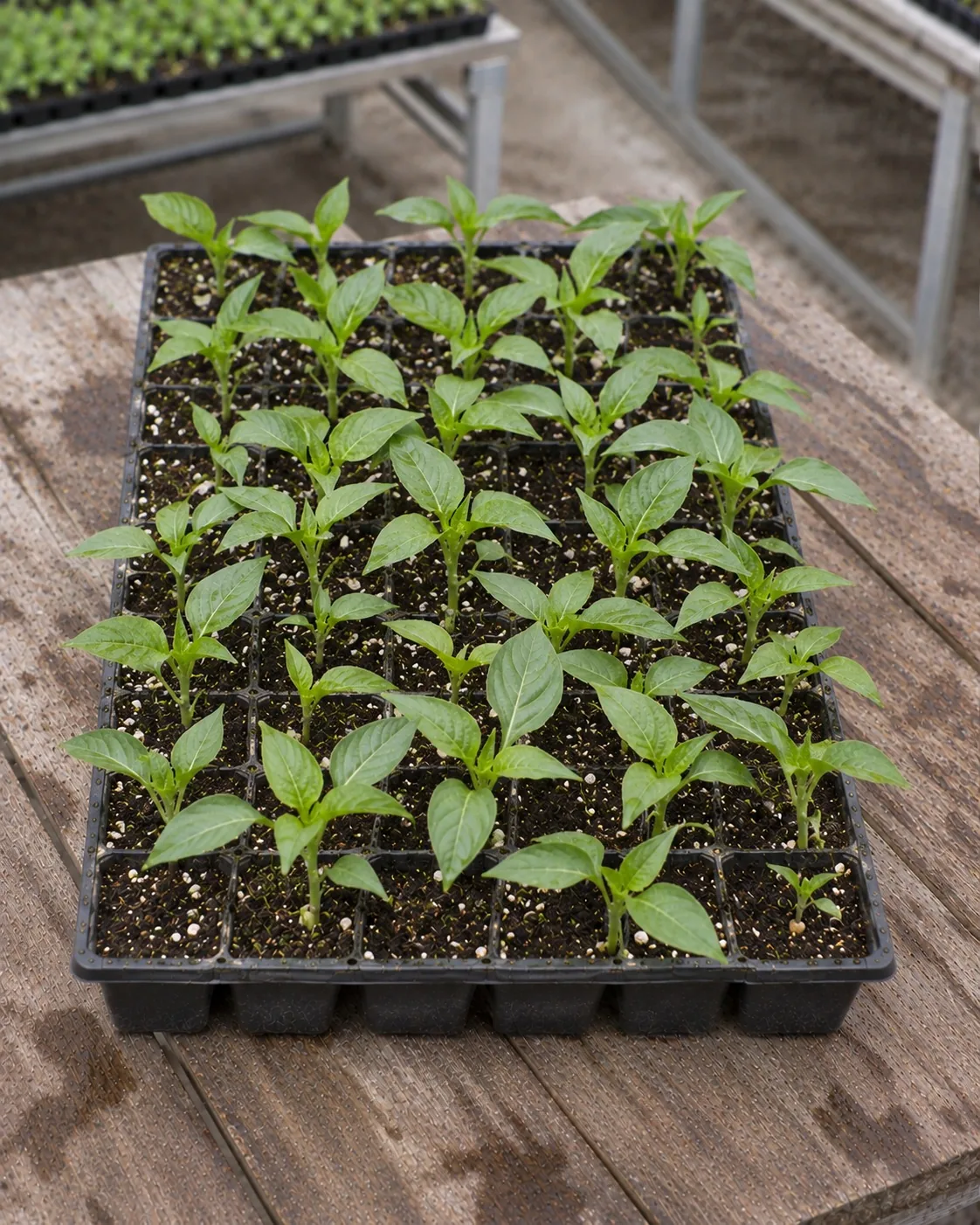
Description
Pepper originates from Mexico, Central America and the northern part of South America. The name (from the Spanish pimiento and the English pepper, both meaning pepper) was given by Christopher Columbus when he brought the plant to Europe; he had evidently found and brought back a hot pepper.
Cultivation
The ideal soil for peppers is sandy, deep and rich in organic matter (around 3–4%). Ideal pH values are between 6.5 and 7, although the crop tolerates acidic conditions down to pH 5.5; in sandy soils pH can reach 8. Irrigation water pH ranges from 5.5 to 7. Saline soils are unsuitable because they slow plant growth, which affects fruit size and yield. Peppers are planted in parallel rows; each plant does not take up much space. Rows are spaced 60–90 cm apart, with 30–50 cm between plants within the row.
Harvest
The plant is very productive because it flowers continuously as long as ripe fruits are harvested. The fruit is green and turns red at physiological maturity, and is sweet or hot depending on its capsaicin content. Fruits reach their final size about 30 days after fertilisation, when they are harvested; if not harvested, they reach full ripeness about 50 days after fertilisation. Fruits intended for red pepper powder are harvested over-ripe, dried and ground.
Translated from the original Greek product information.
Interested in pepper?