Melon
Cucumis melo
Every seedling is supplied with a Plant Passport.
Description
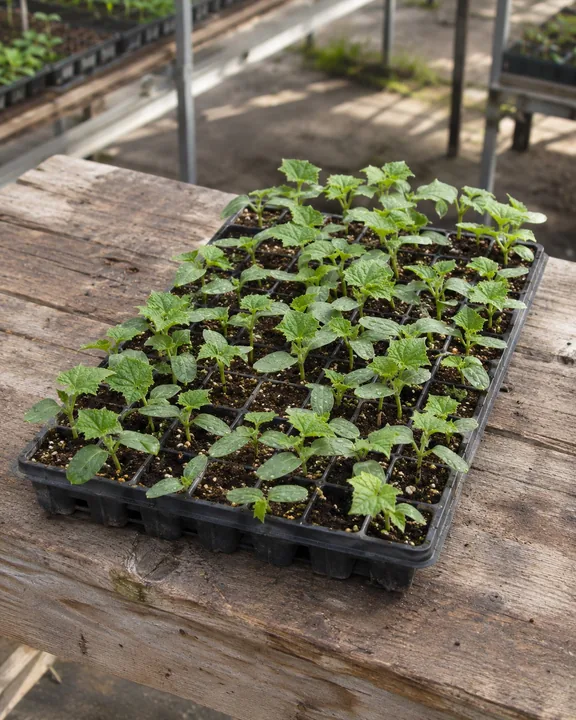
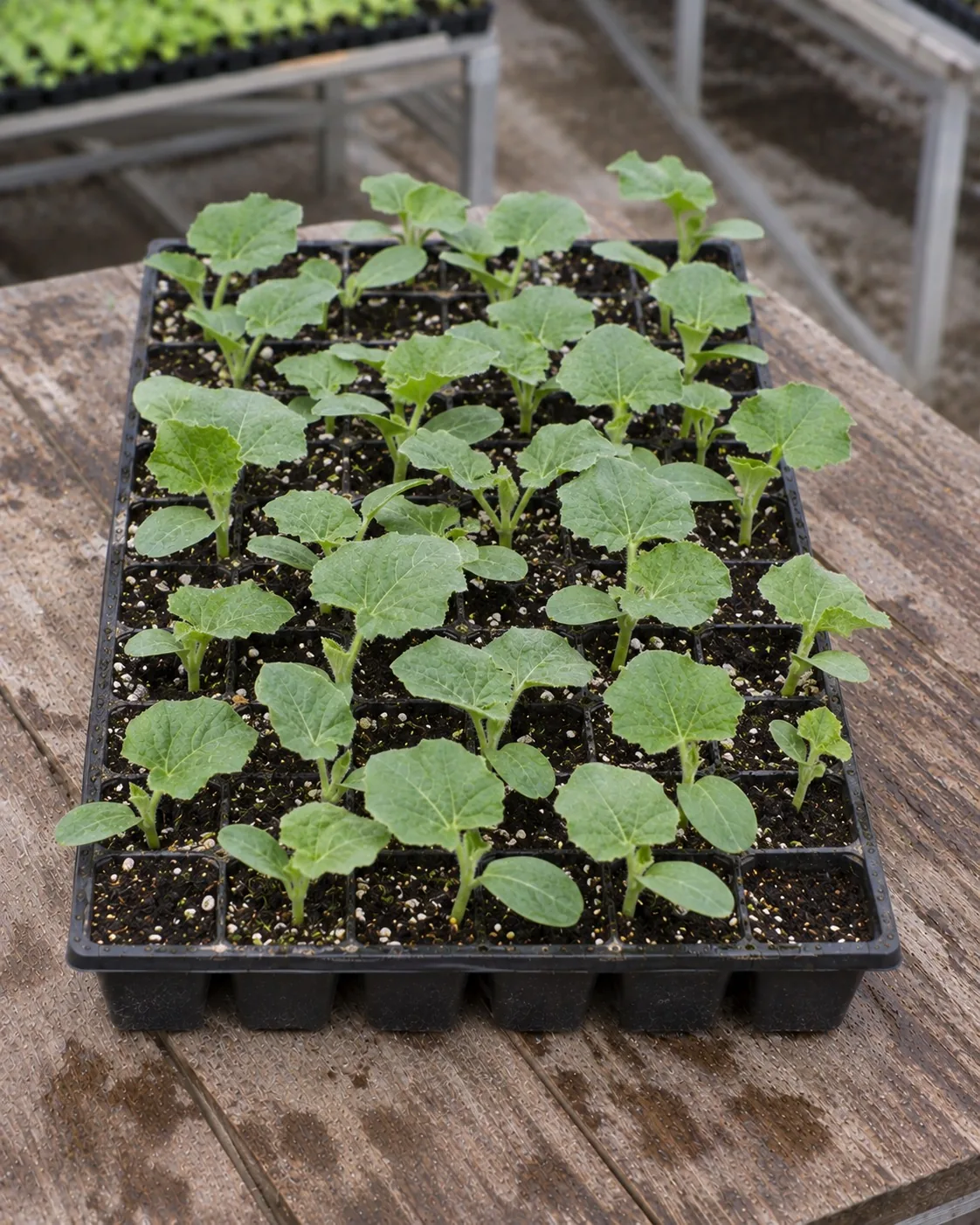
Melon is an angiosperm, dicotyledonous plant of the Cucurbitaceae family. It is a climbing or trailing plant originating from Asia, with hairy, soft, angular stems. Its leaves are large, kidney-shaped or round and alternate, and its yellow flowers grow in the leaf axils.
Cultivation
Melons need warmth and soil moisture. They grow in all soil types, but are demanding and need manure or green manure and, in some cases, fertiliser. For seeds to germinate and grow, soil temperature should be at least 21–27 °C. The right soil for melons is slightly acidic, with a pH between 6.0 and 6.5. Melons need large amounts of water and plenty of nutrients.
Harvest
After fruit set, no more than 2–3 melons should be left per plant so they grow larger and ripen earlier. Once the fruits reach the size of an egg, those closest to the first branches are kept and the rest removed as they appear. As the melons grow and begin to ripen, they should be turned from time to time so they colour evenly and keep a regular shape. Harvest takes place 3–5 months after sowing, depending on variety, soil, climate and growing methods. Ripeness is recognised by colour and the characteristic aroma, and quality by weight. In terms of taste and aroma, the best melons are considered to come from sandy soils or dry-farmed crops and, in general, those that ripen naturally.
Translated from the original Greek product information.
Interested in melon?