Cabbage
Brassica oleracea var. capitata
Every seedling is supplied with a Plant Passport.
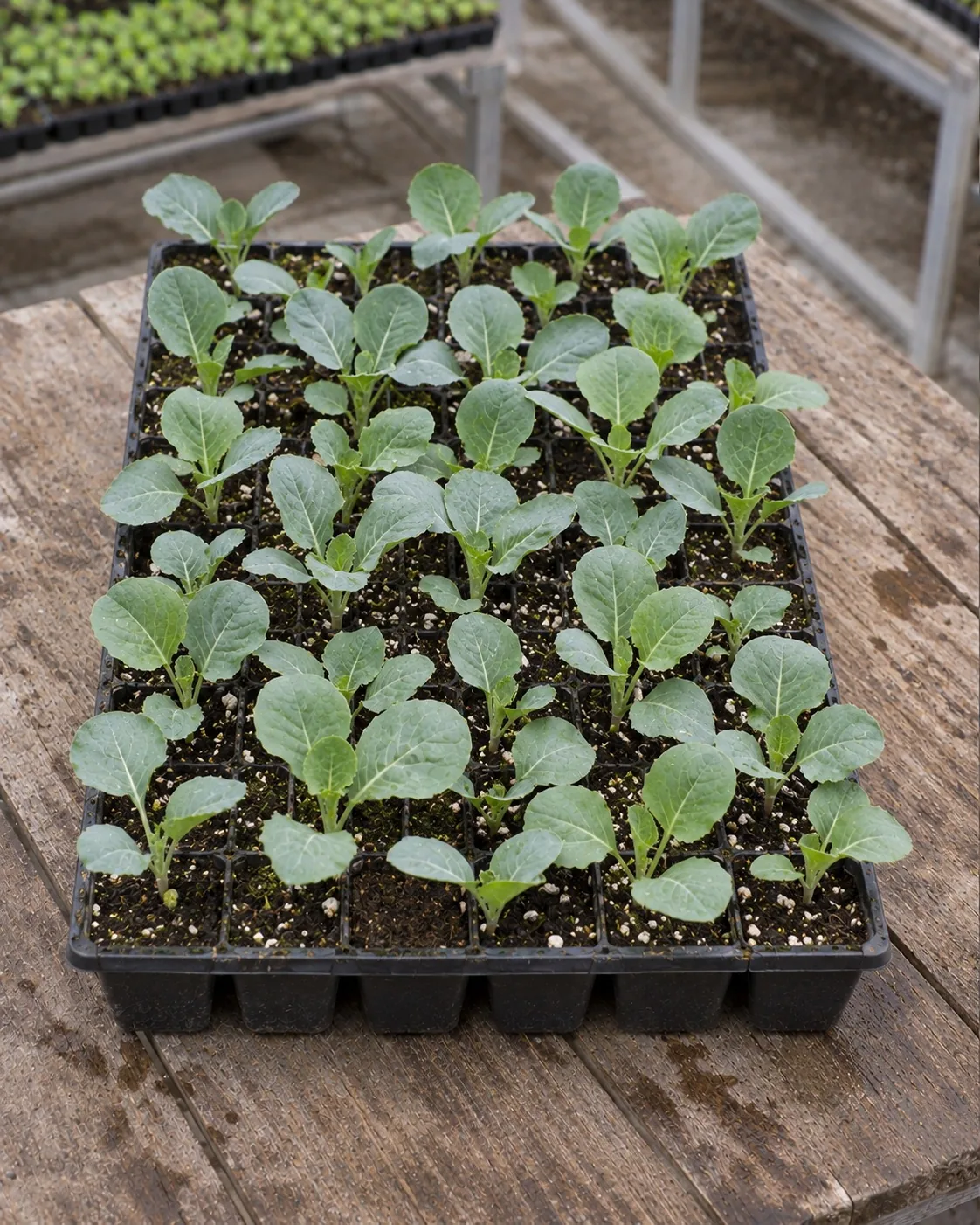
Description
Cabbage belongs to the same family as cauliflower and broccoli (Cruciferae). It is grown for its leafy head, a spherical cluster of immature leaves, which is edible. Depending on the variety, the head is white, red or grey-green. Cabbage is closely related to broccoli and cauliflower.
- Extra-early: mature 55–60 days after transplanting and are usually small. Used for spring cultivation.
- Early: mature in 90 days and are mainly used for summer cultivation.
- Mid-early and mid-late: mature in 120 days and are suitable for autumn cultivation.
- Late or winter: suitable for winter cultivation.
Cultivation
In Greece, cabbage grows best in the autumn–winter period and in spring, though it can also be grown in summer with a suitable hybrid. The optimum growing temperature is 15–18 °C. Although it withstands frost as well as temperatures down to 3–8 °C, in many varieties the production cycle is disrupted if temperatures stay below 10 °C or above 25 °C for long periods. Cabbage grows in all soil types and suffers only in acidic soils (pH should be above 5.5). Sandy, warm soils are preferred for early cabbages, and heavier, well-drained soils rich in organic matter for later ones.
Harvest
The summer-planted crop is harvested from autumn throughout the winter, while the spring crop is harvested from July until the end of autumn.
Translated from the original Greek product information.
Interested in cabbage?